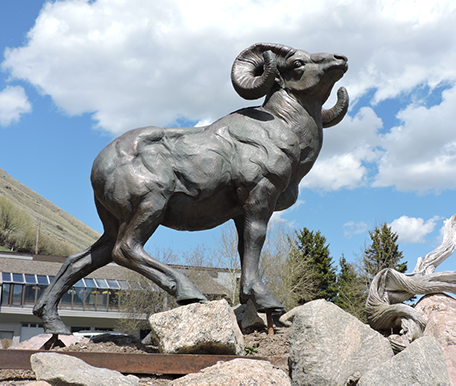
13”H 21”W 7”D
Ed. Size 25
4500
13”H 21”W 7”D
Ed. Size 25
4500
25”H 17.5”W 10”D
Ed. Size 25
4800
No bird better shows attitude than a rooster - chest out, tail up, comb erect - he struts forward meeting the break of day.
The passive and active elements of the bird's shapes present an exciting design source to the sculptor. I have combined the shapes of body mass and tail profusion with controlled modeling of the head and feet in an attempt to design a symbol of arrogance and spirit.
Herons are long-legged, long-necked fresh water coastal birds which can also be found along rivers and ponds. Their pointed dagger-like bill is perfect for catching fish and frogs. The design source for my new sculpture, "Marsh Master" was the Tricolored Heron which is a sleek, slender and fairly small heron compared to its cousin the Great Blue Heron. Reference for the work was gathered at Port Aransas on the Texas gulf coast and is the latest addition to an ongoing portfolio of coastal, wading, and shorebirds in progress.
"After the Hunt - Ruffed Grouse"
16"H 12"W 4"D
Ed. Size 35
3300
Hunting scenes and still lifes became popular in Holland in the late 17th century when secular art was the rage. Unlike Flemish art which typically portrayed religious scenes, Dutch art celebrated the real world. The depiction of fur, feathers, and fish in sporting scenes remain a traditional motif to this day.
The reference for my new wall mount sculpture,
"After the Hunt - Ruffed Grouse" is the result of a fall hunt at the
Lake of the Woods studio in Ontario with our beloved Brittany, Penny. The delicious bird was enjoyed on Canadian
Thanksgiving which is in October.
“Midnight at the Oasis” was inspired by a 2019 trip to Morocco and while there, Trish was determined to ride a camel. The bus stopped outside Marrakesh where men with a group of camels were giving rides to the tourists. As Trish bounced along across the sand, I took pictures and took it all in. I found myself humming Maria Muldaur’s old 1973 tune, “Midnight at the Oasis” all the way to Fez and planned my sculpture of the gaily tacked camels in a recumbent pose. . . every camel stop resulted in more pictures.
Back home in the studio, true to my self-imposed rule of never modeling an animal unless I’ve experienced it afield, the inspiration remained safely in my mind and digital reference.
During the 1990s through 2008 Trish and I spent the first two weeks of December in Puerto Vallarta. The holiday season is lively and colorful in Mexico and one of the biggest celebrations is the Festival of Our Lady of Guadalupe on the days leading up to December 12. Nightly parades through cobbled streets, mariachi music, food, daytime off-shore fishing in a beautiful tropical setting . . . joyful days that defined our Christmas for many years.
I’m always on the lookout for animals indigenous to any area I visit and the green iguana is a common species seen in Puerto Vallarta. Men in white clothes would walk the beaches with the large captive lizard offering tourists a chance to have their picture taken with the creature wrapped around their neck. We preferred being at sea, fishing from an open panga with a captain, his mate, and an iced cooler for refreshments and the delictable fish that was cooked for us nightly at our favorite beach cantina.
A trotter moves its legs forward in diagonal pairs whereas a pacer moves its legs laterally – right front and hind together, then left front and left hind. The pace is a faster gait than the trot and a majority of horses that compete in harness racing are pacers.
The pace is performed by the Standardbred horse and although it is an artificial gait, it is natural to the breed. There are five natural gaits of the horse: walk, trot, canter, gallop, and back. Additional artificial gaits include the flashy rack, performed by the American Saddlebred and the running walk, characteristic of the Tennessee Walking Horse.
"Wooded Water"
21"H 18"W 13"D
Ed. size 25
4,200
Blog, text, photos, drawings, and sculpture . . . © Sandy Scott and Trish